
If you’re new to Medicare, you’ve probably discovered that there isn’t just one enrollment period—there are several. Understanding when you can enroll or make changes is just as important as understanding the different parts of Medicare.
Missing an enrollment deadline can result in delayed coverage or even permanent late enrollment penalties.
This guide explains each Medicare enrollment period in plain English so you know when you can enroll and what changes you’re allowed to make.
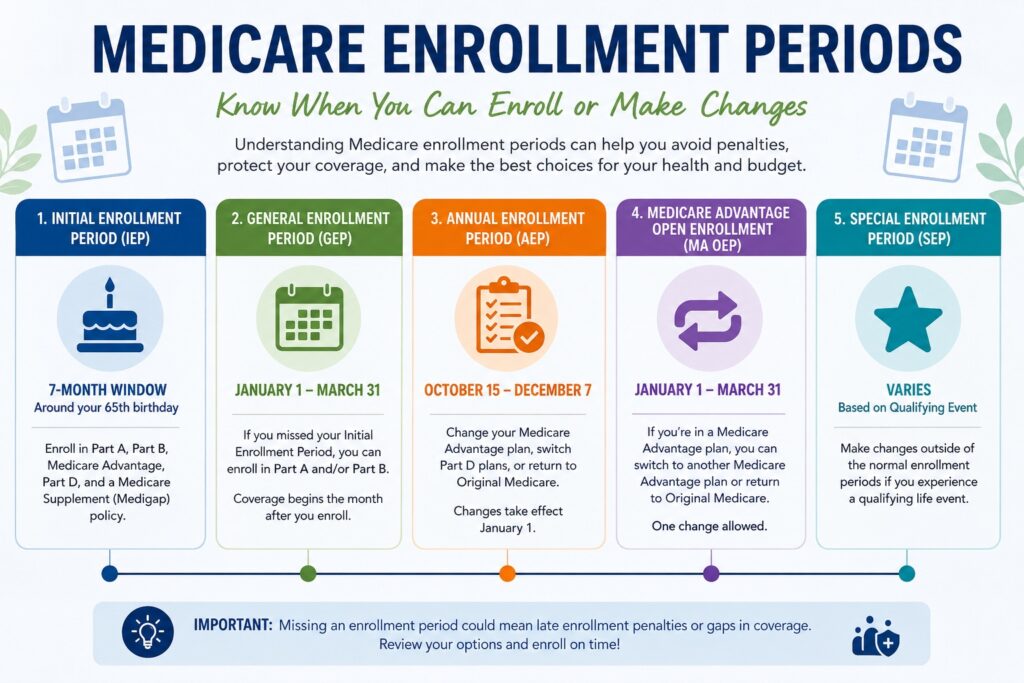
Why Does Medicare Have Different Enrollment Periods?
Each enrollment period serves a different purpose.
Some allow you to enroll in Medicare for the first time, while others let you review and change your coverage after you’re already enrolled.
Knowing which enrollment period applies to your situation can help you avoid unnecessary costs and ensure you have the coverage that best fits your needs.
1. Initial Enrollment Period (IEP)
Who it’s for: People becoming eligible for Medicare for the first time.
For most people, the Initial Enrollment Period begins around their 65th birthday.
It lasts seven months:
- Three months before your birthday month
- Your birthday month
- Three months after your birthday month
During this period you may enroll in:
- Medicare Part A
- Medicare Part B
- Medicare Advantage (Part C)
- Medicare Part D prescription drug coverage
- A Medicare Supplement (Medigap) policy if you choose Original Medicare
Example:
If your 65th birthday is in July, your Initial Enrollment Period runs from April 1 through October 31.
2. General Enrollment Period (GEP)
When: January 1 – March 31 each year
The General Enrollment Period is designed for people who missed their Initial Enrollment Period and do not qualify for a Special Enrollment Period.
During this period, you can enroll in:
- Medicare Part A (if applicable)
- Medicare Part B
Coverage generally begins the month after you enroll.
Important: Some individuals may have to pay a late enrollment penalty if they delayed enrolling in Part B without having other qualifying coverage.
3. Annual Enrollment Period (AEP)
October 15 – December 7 each year
This is often called Medicare Open Enrollment and is the enrollment period most people hear about.
During AEP, you can:
- Switch from Original Medicare to a Medicare Advantage plan
- Return from Medicare Advantage to Original Medicare
- Change from one Medicare Advantage plan to another
- Join, switch, or drop a Medicare Part D prescription drug plan
Any changes generally take effect on January 1 of the following year.
This is an excellent time to review:
- Prescription drug coverage
- Provider networks
- Monthly premiums
- Out-of-pocket costs
- Additional benefits such as dental, vision, hearing, fitness memberships, and over-the-counter allowances
4. Medicare Advantage Open Enrollment Period (MA OEP)
January 1 – March 31 each year
This enrollment period is only for people already enrolled in a Medicare Advantage plan.
During this period you may:
- Switch to another Medicare Advantage plan (one time)
- Return to Original Medicare
- Enroll in a standalone Part D prescription drug plan if you return to Original Medicare
You cannot use this enrollment period to enroll in Medicare Advantage if you’re currently on Original Medicare.
5. Special Enrollment Periods (SEP)
Life doesn’t always follow a calendar.
Certain events may qualify you for a Special Enrollment Period, allowing you to make Medicare changes outside the normal enrollment windows.
Common qualifying events include:
- Moving to a new service area
- Losing employer-sponsored health coverage
- Qualifying for Medicaid or Extra Help
- Moving into or out of a nursing facility
- Gaining or losing other creditable health coverage
- Certain plan contract changes
The rules vary depending on the qualifying event, so it’s important to review your options promptly.
Medicare Enrollment Periods at a Glance
| Enrollment Period | Dates | What You Can Do |
|---|---|---|
| Initial Enrollment Period (IEP) | 7-month window around your 65th birthday | Enroll in Medicare for the first time |
| General Enrollment Period (GEP) | January 1 – March 31 | Enroll in Part A and/or Part B if you missed your first opportunity |
| Annual Enrollment Period (AEP) | October 15 – December 7 | Change Medicare Advantage or Part D plans |
| Medicare Advantage Open Enrollment | January 1 – March 31 | One change if you’re already enrolled in a Medicare Advantage plan |
| Special Enrollment Period (SEP) | Varies | Make changes after certain qualifying life events |
Common Medicare Enrollment Mistakes
Many people unintentionally make costly mistakes, including:
- Assuming Medicare enrollment is automatic.
- Missing enrollment deadlines while still working.
- Keeping a prescription drug plan that no longer covers their medications well.
- Believing Open Enrollment is the only time Medicare changes can be made.
- Waiting too long to ask questions.
A little planning can help you avoid these issues.
How YourMedicareMN Can Help
Medicare enrollment periods can feel confusing, especially if you’re enrolling for the first time or experiencing a life change.
At YourMedicareMN, our goal is to educate first and help you understand your options before making any decisions. We’ll explain how the enrollment periods work, answer your questions, and help you determine which coverage best fits your situation.
Whether you’re turning 65, retiring, moving, or reviewing your current Medicare coverage, we’re here to help you make informed decisions with confidence.
Have questions about your Medicare enrollment period?
Contact YourMedicareMN today for a no-cost, no-obligation Medicare review.
Frequently Asked Questions
What is the difference between Medicare Open Enrollment and General Enrollment?
Open Enrollment (October 15–December 7) allows people already on Medicare to change their coverage. General Enrollment (January 1–March 31) is for people who missed signing up for Medicare Part A and/or Part B when they first became eligible and don’t qualify for a Special Enrollment Period.
Can I change my Medicare plan anytime?
No. Most Medicare changes must be made during an enrollment period unless you qualify for a Special Enrollment Period due to a qualifying life event.
Will I pay a penalty if I miss Medicare enrollment?
Possibly. Delaying enrollment in Medicare Part B or Part D without qualifying coverage may result in permanent late enrollment penalties.
How do I know which enrollment period applies to me?
That depends on your age, current Medicare coverage, employment status, and whether you’ve experienced a qualifying life event. A licensed Medicare advisor can help determine which enrollment period applies to your situation.
Remember: Understanding your enrollment period is the first step toward choosing Medicare coverage that fits your needs. Don’t wait until a deadline has passed—review your options early and ask questions if you’re unsure.