
One of the biggest fears people have when approaching Medicare is hearing someone say:
“I didn’t sign up on time, and now I’m paying a penalty for the rest of my life.”
The good news is that most Medicare penalties are completely avoidable if you understand the rules and enroll at the right time.
Whether you’re turning 65, still working, or preparing to retire, knowing when and how to enroll can save you hundreds—or even thousands—of dollars over your lifetime.
Here’s what every Minnesota Medicare beneficiary should know.
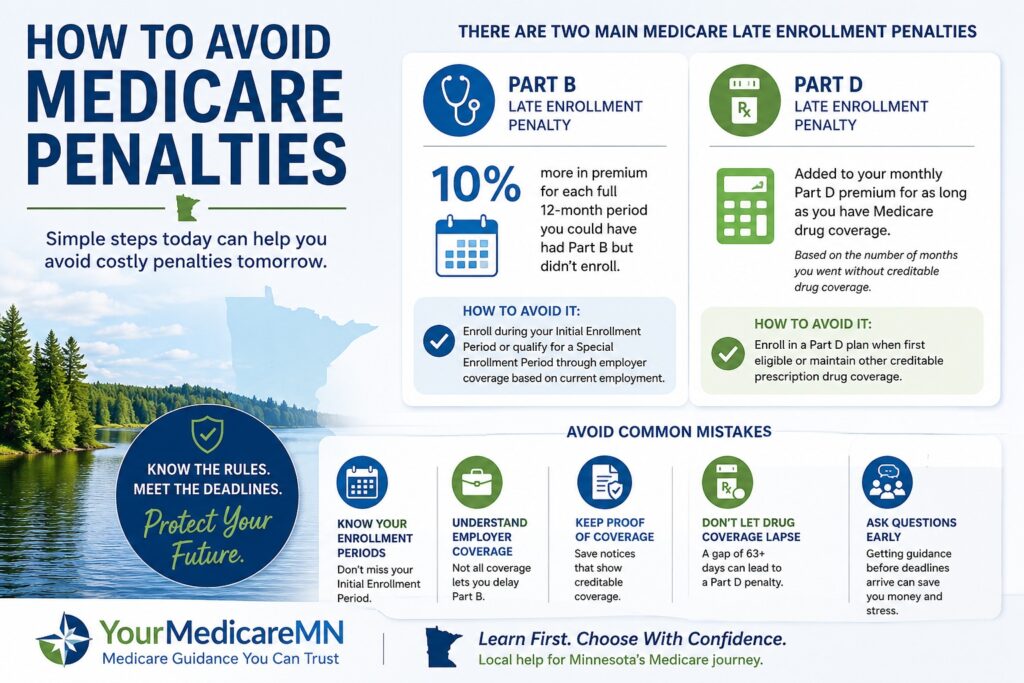
The Two Medicare Penalties You Need to Know
Most people only need to worry about two Medicare late enrollment penalties:
- Medicare Part B Late Enrollment Penalty
- Medicare Part D Late Enrollment Penalty
Let’s look at each one.
Medicare Part B Late Enrollment Penalty
Medicare Part B covers services such as:
- Doctor visits
- Outpatient care
- Preventive screenings
- Durable medical equipment
- Lab work and diagnostic testing
If you delay enrolling in Part B when you should have enrolled, Medicare may charge a 10% premium penalty for every full 12-month period you were eligible but didn’t enroll.
Example
Suppose you delayed enrolling for three full years without qualifying for a Special Enrollment Period.
Your Part B premium could increase by 30%—and that higher premium generally continues for as long as you have Part B.
How to Avoid the Part B Penalty
You can usually avoid this penalty by:
- Enrolling during your Initial Enrollment Period when you first become eligible.
- Qualifying for a Special Enrollment Period if you continue working and have employer group health coverage based on current employment.
- Enrolling promptly after your employer coverage ends if you qualify for that Special Enrollment Period.
Many people mistakenly believe they can wait simply because they have health insurance. In reality, not every type of coverage allows you to delay Part B without penalty.
Medicare Part D Late Enrollment Penalty
Medicare Part D helps pay for prescription medications.
Even if you don’t currently take prescriptions, you should still consider whether you need Part D coverage.
If you go 63 or more consecutive days without Medicare drug coverage or other creditable prescription drug coverage after becoming eligible, Medicare may assess a late enrollment penalty if you enroll later.
Unlike the Part B penalty, the Part D penalty is based on the number of months you went without creditable drug coverage and is generally added to your monthly Part D premium for as long as you have Medicare prescription drug coverage.
How to Avoid the Part D Penalty
You can generally avoid the Part D penalty by:
- Enrolling in a Medicare Part D plan when first eligible, or
- Maintaining other creditable prescription drug coverage, such as qualifying employer or union coverage.
If you’re covered through an employer, ask whether your prescription drug coverage is considered creditable under Medicare rules. Keep any annual notices confirming that status.
Is IRMAA a Medicare Penalty?
Many people believe the Income-Related Monthly Adjustment Amount (IRMAA) is a Medicare penalty.
It isn’t.
IRMAA is an additional premium paid by higher-income Medicare beneficiaries for Medicare Part B and, if applicable, Part D. The amount is based on your income from approximately two years earlier.
If your income has recently decreased because of retirement or another qualifying life-changing event, you may be able to request a new determination from the Social Security Administration.
Common Medicare Mistakes That Can Lead to Penalties
Many Medicare penalties happen because of misunderstandings—not because people intentionally ignored the rules.
Here are some of the most common mistakes:
Assuming Medicare Is Automatic
Not everyone is automatically enrolled in Medicare. If you are not receiving certain Social Security benefits before becoming eligible, you may need to enroll yourself.
Waiting Too Long After Retirement
If you delayed Part B because you had qualifying employer coverage, your Special Enrollment Period is limited. Missing that enrollment window could lead to penalties and delays in coverage.
Letting Drug Coverage Lapse
Some people decide they don’t need prescription drug coverage because they currently take few or no medications.
Unfortunately, enrolling later may result in a lifelong Part D late enrollment penalty unless you’ve maintained creditable coverage.
Assuming COBRA Counts as Employer Coverage
COBRA can be valuable, but it generally does not extend your ability to delay Medicare Part B without risking penalties. Timing matters, so it’s important to understand how COBRA and Medicare work together.
Not Asking Questions Early
Many costly Medicare mistakes happen simply because people waited until the last minute to seek guidance.
Starting the conversation a few months before Medicare eligibility provides more time to understand your options and make informed decisions.
A Simple Medicare Penalty Prevention Checklist
Before enrolling in Medicare, ask yourself:
✅ Do I know when my Initial Enrollment Period begins and ends?
✅ Will I still have employer coverage based on current employment?
✅ Is my prescription drug coverage considered creditable?
✅ Do I have documentation proving my employer coverage?
✅ Do I understand when I need to enroll after retiring?
If you’re unsure about any of these questions, it’s worth getting guidance before deadlines arrive.
The Bottom Line
Most Medicare penalties are preventable.
The key is understanding when you need to enroll and which rules apply to your situation.
Every person’s circumstances are different. Your age, employment status, current insurance, prescription drug coverage, and retirement plans can all affect your Medicare timeline.
That’s why personalized guidance can make all the difference.
At YourMedicareMN, our mission is simple:
Learn First. Choose With Confidence.
We’ll help you understand your Medicare options, explain important enrollment deadlines, and answer your questions—so you can make informed decisions without pressure.
If you’re approaching Medicare or planning to retire, we’re here to help Minnesota residents navigate Medicare with confidence.
Frequently Asked Questions
Can I avoid Medicare penalties if I’m still working?
Possibly. If you have qualifying employer group health coverage based on current employment, you may be able to delay enrolling in Medicare Part B without penalty. Your situation depends on factors such as the employer coverage you have and your employment status.
Does everyone have to enroll in Part D?
Not necessarily. If you have other creditable prescription drug coverage, you may be able to delay enrolling in a Part D plan without incurring a late enrollment penalty.
Is the Medicare Part B penalty permanent?
In most cases, yes. The Part B late enrollment penalty generally remains part of your monthly premium for as long as you have Medicare Part B.
Is IRMAA the same as a Medicare penalty?
No. IRMAA is an income-related premium adjustment for higher-income beneficiaries. It is not a late enrollment penalty.
Need Help Understanding Medicare?
If you’re unsure when to enroll or whether your current coverage allows you to delay Medicare without penalties, YourMedicareMN can help you understand your options.
Our educational consultations are designed to help Minnesota residents make informed Medicare decisions with confidence.
Need Help Understanding Medicare?
If you’re unsure when to enroll or whether your current coverage allows you to delay Medicare without penalties, YourMedicareMN can help you understand your options.
At YourMedicareMN, we help Minnesota Medicare beneficiaries compare their options, understand their coverage, and make informed decisions based on their unique prescription needs.
Visit Contact Us to schedule a personalized Medicare review and get answers tailored to your situation.
For official Medicare information, visit the Medicare.gov website.