Prescription Drug Coverage Explained
Prescription medications are an important part of staying healthy as we age. Yet Medicare prescription drug coverage can be one of the most confusing parts of Medicare.
If you’re turning 65, retiring, or reviewing your Medicare coverage during the Annual Enrollment Period, understanding Med icare Part D can help you avoid costly mistakes and save hundreds—or even thousands—of dollars each year.
This guide explains Medicare prescription drug coverage in plain English.
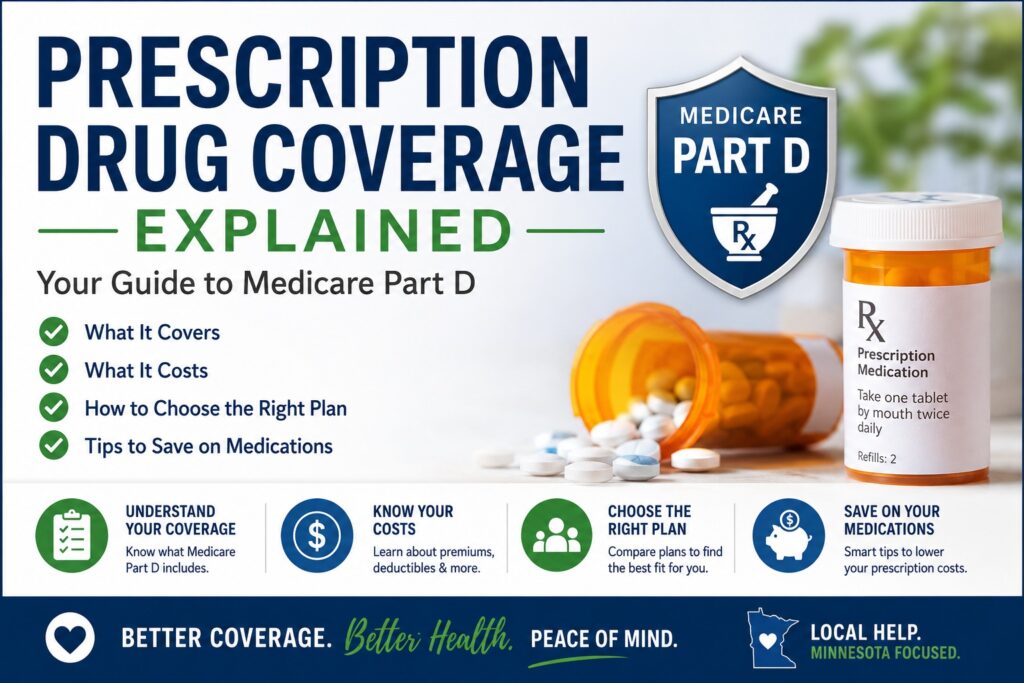
Prescription Drug Coverage Explained: A Simple Guide to Medicare Part D in Minnesota
Meta Title: Prescription Drug Coverage Explained | Medicare Part D Guide for Minnesota Seniors
Meta Description: Learn how Medicare Part D prescription drug coverage works, what it costs, what it covers, and how to choose the right plan in Minnesota.
Prescription Drug Coverage Explained
Prescription medications are an important part of staying healthy as we age. Yet Medicare prescription drug coverage can be one of the most confusing parts of Medicare.
If you’re turning 65, retiring, or reviewing your Medicare coverage during the Annual Enrollment Period, understanding Medicare Part D can help you avoid costly mistakes and save hundreds—or even thousands—of dollars each year.
This guide explains Medicare prescription drug coverage in plain English.
What Is Medicare Part D?
Medicare Part D is the portion of Medicare that helps pay for prescription medications.
You can receive prescription drug coverage in one of two ways:
- A stand-alone Part D Prescription Drug Plan (PDP) if you have Original Medicare.
- A Medicare Advantage Prescription Drug (MAPD) plan, which combines medical and prescription drug coverage into one plan.
Although Part D is offered through private insurance companies approved by Medicare, every plan must follow Medicare rules.
What Does Medicare Part D Cover?
Every Part D plan includes a list of covered medications called a formulary.
Most plans cover:
- Generic medications
- Brand-name drugs
- Medications for chronic conditions
- Vaccines recommended by Medicare
- Specialty medications (often at higher costs)
Each insurance company has its own formulary, so a medication covered by one plan may not be covered—or may cost more—under another.
That’s why comparing plans every year is important.
Understanding Drug Tiers
Most Medicare Part D plans organize medications into tiers.
Typical tiers include:
Tier 1 – Preferred Generic
- Lowest cost
Tier 2 – Generic
- Low cost
Tier 3 – Preferred Brand
- Moderate cost
Tier 4 – Non-Preferred Brand
- Higher cost
Tier 5 – Specialty Drugs
- Highest cost
Generally, the higher the tier, the more you’ll pay.
How Much Does Medicare Part D Cost?
Your costs may include:
- Monthly premium
- Annual deductible (if applicable)
- Copays
- Coinsurance
The actual amount depends on:
- The plan you choose
- The medications you take
- The pharmacy you use
Many people are surprised to learn that using a preferred pharmacy can significantly reduce prescription costs.
Why Choosing the Right Plan Matters
Two Part D plans may have similar monthly premiums but dramatically different costs for your medications.
When comparing plans, look at:
- Your specific prescriptions
- Drug tiers
- Preferred pharmacies
- Total annual cost—not just the monthly premium
The least expensive premium isn’t always the least expensive plan overall.
Medicare Part D Enrollment
You generally enroll in Part D when you first become eligible for Medicare.
You can also make changes during:
- Annual Enrollment Period (October 15 – December 7)
- Certain Special Enrollment Periods if you qualify
Waiting too long to enroll without other creditable prescription drug coverage may result in a late enrollment penalty that can last for as long as you have Medicare drug coverage.
Can I Change My Drug Plan Every Year?
Yes.
Prescription drug plans:
- Change premiums
- Update formularies
- Add or remove medications
- Change pharmacy networks
Even if your medications stay the same, your plan may not.
That’s why reviewing your coverage every fall is one of the smartest Medicare decisions you can make.
Tips for Lowering Prescription Drug Costs
You may be able to reduce your medication expenses by:
- Choosing generic medications when appropriate
- Using preferred pharmacies
- Comparing Part D plans annually
- Asking your doctor about therapeutic alternatives
- Reviewing your medications each year
A little comparison shopping can result in significant savings.
Common Medicare Part D Mistakes
Many people unknowingly make costly mistakes, including:
- Choosing a plan based only on the monthly premium
- Not checking whether medications are covered
- Ignoring pharmacy networks
- Forgetting to review their plan each year
- Missing their enrollment deadline
Avoiding these mistakes can save both money and frustration.
How We Help Minnesota Medicare Beneficiaries
At YourMedicareMN, we believe Medicare should be understandable—not overwhelming.
We help Minnesota residents:
- Compare Medicare prescription drug plans
- Review medication costs
- Understand Medicare Advantage and Part D options
- Evaluate Medicare Supplement plans
- Prepare for Annual Enrollment
- Make confident Medicare decisions based on their individual needs
Our goal is education first, so you can choose coverage that fits both your healthcare needs and your budget.
Frequently Asked Questions
Do I need Medicare Part D if I don’t take any medications?
Many people still enroll to avoid future late enrollment penalties and to have coverage available if their medication needs change.
Can I use any pharmacy?
Most plans have preferred pharmacy networks. Using an in-network preferred pharmacy often results in lower costs.
What if my medication isn’t covered?
Your doctor may be able to request an exception, prescribe an alternative medication, or help you find another plan during an eligible enrollment period.
Is Medicare Part D required?
No, but if you don’t have other creditable prescription drug coverage, delaying enrollment could result in a permanent late enrollment penalty.
Final Thoughts
Prescription drug coverage is more than just a monthly premium. The right Medicare Part D plan can save you money, provide access to the medications you need, and give you peace of mind throughout the year.
Because every person’s medications and healthcare needs are different, reviewing your options annually is one of the best ways to maximize your Medicare benefits.
If you have questions about Medicare prescription drug coverage in Minnesota, YourMedicareMN is here to help you understand your options and make informed decisions with confidence.